
Tangy Chicken and Peanuts (Gong Bao Chicken)

Dave DeWitt Recipes Leave a Comment

 This recipe and others can be found in the following article:


The Tongue-Numbing “Flower Pepper” of Sichuan Province

by Kimberly Dukes

 
Gong Pao Chicken

Ingredients

Marinade Ingredients:
  • 3 teaspoons sherry
  • 1 1/2 teaspoons light soy sauce
  • 2 teaspoons dark soy sauce
  • 1/2 teaspoon salt
  • 2 teaspoons cornstarch
  • 1 teaspoon water
 
Sauce Ingredients:
  • 4 teaspoons sugar
  • 1 1/2 teaspoons cornstarch
  • 2 teaspoons dark soy sauce
  • 2 teaspoons light soy sauce
  • 4 teaspoons vinegar
  • 2 teaspoons sesame oil
  • 2 teaspoons water
 
Stir-Fry Ingredients:
  • 1 to 2 boneless chicken breasts, cubed (about 1/2 pound)
  • 3 tablespoons peanut oil
  • 24 small Japanese chiles, halved, most seeds discarded
  • 2 teaspoons Sichuan peppercorns
  • Chunk of ginger about the same size as the garlic, minced
  • 4 medium cloves of garlic, minced
  • 1 cup chopped celery (cut on a slant)1 bunch green onions or scallions, chopped in 1-inch sections (about 1/2 cup)
  • 1/2 cup peanuts
  • Cilantro or parsley, chopped, to garnish (optional)

Instructions

In a medium bowl, combine the marinade ingredients and stir well. Add the chicken and let it sit while you chop, measure, and combine the other ingredients.
In a small bowl, combine the sauce ingredients.
 
In a wok, heat the oil over high heat. When it is quite hot, add the chiles and the Sichuan peppercorns and stir continually for about half a minute, until the oil smells spicy. Be careful not to let the spices burn–you might want to take the wok off the heat for a moment or two.
 
Add the chicken and whatever is left of the marinade, stirring continually for a few minutes, until the chicken is cooked through. Add the ginger and garlic, stir-frying until it smells fragrant, 15-30 seconds. Be careful not to burn them.
 
Stir the sauce again and add it to the wok, stirring for about 30 seconds. Add the celery and stir for about 15 seconds. Add the spring onions and stir for about 15 seconds. Add the peanuts and stir for about 15 seconds.
 
Serve on a flat oval plate in a single layer so that the sauce is distributed evenly. Garnish with cilantro or parsley if desired. Eat with chopsticks if you can!
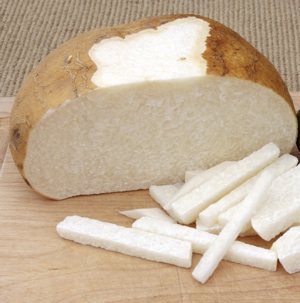
jicama

Chile de Arbol Salad

Mark Masker Cooking with Chiles at the Holidays, Recipes Leave a Comment

Jicamas are a bulbous root vegetable with thin brown skin and a crisp, crunchy, sweet flesh rather like a water chestnut. In Mexico, jicamas are a popular snack food sold by street vendors who cut them into sticks, douse them with lime juice, and sprinkle them with chile. Sometimes called a Mexican potato, it’s good both raw and cooked, although it is usually served raw as an appetizer or in salads such as this one. This spicy salad dressing goes well with a number of fruits and vegetables so experiment with your own combinations.

Khaz Bay Salmon with Soba Noodles and Ginger Sauce

Dave DeWitt Recipes Leave a Comment

Developed by Tara Zuluaga, the Home Shore’s kayak charter chef, this recipe graces Alaska salmon, soba noodles, and sautéed vegetables with a creamy ginger-garlic sauce. Although this version of the recipe calls for grilled salmon, baking the fish also produces excellent results.

Ingredients

The Marinade:

  • 1/2 cup honey

  • 1/2 cup lime juice

  • 1/2 cup soy sauce

  • 3 teaspoons brown sugar

  • Salmon:

  • 2 pounds skin-on Alaska salmon fillets (chinook, coho, or king), about 1 inch thick

  • Vegetable oil

The Sauce:

  • 3/4 cup dry white wine

  • 1 tablespoon fresh garlic, minced

  • 1 tablespoon fresh ginger, minced

  • 1/2 cup cream

  • 1/2 teaspoon salt

  • 1/2 teaspoon black pepper

  • 1/2 cup butter, cut into small pieces

  • 2 tablespoons lime juice

  • Vegetables and Noodles:

  • 1 8-ounce package of chucka soba or yaki soba noodles

  • 2 tablespoons hot sesame oil

  • 1 small onion, thinly sliced

  • 1 1/2 cup thinly sliced mushrooms

  • 1 1/2 cup sugar snap peas

  • 1 tablespoon soy sauce

The Garnish:

  • 1 tablespoon sesame seeds

  • 2 tablespoons thinly sliced green onions

  • 1/2 cup thinly sliced red bell peppers

Instructions

Whisk the marinade ingredients in small (1 quart) mixing bowl until well combined. Place the salmon in a casserole dish, coat it with the marinade, and refrigerate it for one hour.

Meanwhile, begin working on the sauce. In a medium (2- to 3-quart) saucepan, bring the wine to a boil over high heat. Add the ginger and garlic and boil for 1 minute. Reduce the heat medium-low and simmer the mixture until it is reduced by half. Add the cream and continue to simmer the mixture over medium-low heat (do not allow it to boil) until it is again reduced by half. Stir in the salt and pepper. Add the butter gradually, stirring in one piece at a time with a wooden spoon, until it is fully incorporated. Reduce the heat to low until the salmon is ready. Whisk in the lime juice just before serving the sauce.

After the salmon has marinated for one hour, pour off the marinade and set aside. Brush the meat side of the fillet with vegetable oil using a pastry brush, and grill it over hot coals, meat side down, until it is slightly browned about 3 to 4 minutes). Turn the fillet, skin side down, and brush it with the reserved marinade. Grill the fillet over low heat for 5 minutes. Check for doneness by gently breaking open the fillet its thickest part with a fork. If the meat is barely opaque, remove the fillet from the grill. If the fillet is still translucent in the center, grill it for 1 minute and re-check for doneness. Continue this process until the fillet is just opaque at its thickest part.

Meanwhile, soak the chucka soba or yaki soba noodles in a large (3- to 4- quart) saucepan filled with warm (not hot) water for 2 minutes. Drain the noodles and set aside. Preheat a wok or a medium (2- to 3-quart) skillet over medium-high heat. Add 1 tablespoon of the sesame oil to the preheated wok or skillet and wait for 1 minute. Stir in the onion, mushrooms, and snap peas.

Sauté the vegetables over medium-high heat for 2 to 3 minutes, or until they are tender but still crisp. Set the vegetables aside. Add the drained soba noodles to the wok or skillet and coat them with the soy sauce and the remaining sesame oil. Add the vegetables to the wok or skillet and mix them into the noodles until they are well combined. Serve the salmon over the vegetable- noodle mixture and top the combination with warm ginger sauce.

Sprinkle the dish with the garnishes as desired.


Chicken with Basil

Dave DeWitt Recipes Leave a Comment

“Holy” basil is widely available in Thai stores. The stems are purple and the leaves are pointed, distinguishing it from regular sweet basil. I actually prefer the flavor to “regular” basil—it’s slightly more bitter and fragrant, with a unique aroma. The basil doesn’t require much cooking, as too much heat makes it bitter and destroys the delicate flavor.

Ingredients

  • 3 tablespoons oil

  • 2 garlic cloves, crushed

  • 1/2 pound chicken breast, chopped coarsely

  • 1 tablespoon fish sauce

  • 4 fresh red chiles, sliced lengthwise

  • 1 large bunch of Thai “holy” basil

Instructions

Heat the oil in a wok and fry the garlic until fragrant. Add the chicken breast, and cook over high heat for a few minutes. Add fish sauce and chiles and cook for a few minutes more. Add the basil and toss together until cooked.

Mangos with Sticky Rice

Dave DeWitt Recipes Leave a Comment

Mangos and coconut milk are meant for each other, and sticky rice is the icing on the cake. Try to get yellow-skinned “Manila” mangos if you can—the flavor is stronger and more acidic than the green and red-skinned South American varieties.

Ingredients

  • 1 cup sticky rice

  • 1 can coconut milk, separated into: 1 cup coconut milk and 1/4 cup coconut cream

  • 1/2 cup sugar

  • 1/2 tsp salt

  • 1-2 large ripe mangos, peeled and sliced

Instructions

Soak the sticky rice for several hours, then place in a bamboo steamer over a wok of boiling water until translucent and dry. A large stock pot with a bowl inside can be used as a substitute if the normal bamboo steamer is not available. Sticky rice is very hard and requires a lot of water to cook, so don’t let the steamer run dry.

Heat the coconut milk, sugar and salt in a saucepan over low heat until sugar just dissolves. Pour about half of the mixture over the cooked sticky rice and mix well. Add coconut cream to the remaining mixture and heat to a boil, then cook 5 to 10 minutes until thickened. Allow to cool. Place the rice in a serving bowl, top with sliced mango and drizzle with the coconut cream mixture. Serve at room temperature.